Local SEO is essential for businesses that rely on a local customer base. With more consumers turning to Google to find businesses near them, it’s vital to ensure your website is optimized for local search. In this article, we’ll dive into a detailed local SEO strategy that covers the essential tactics to boost your local search visibility.
Why is Local SEO Important?
- Increased Visibility: Businesses appear in relevant search results when potential customers look for products or services nearby.
- Higher Engagement: Local customers are more likely to visit, call, or make purchases when they find a local business online.
- Targeted Traffic: Local SEO helps you target customers who are ready to buy or use your services in your specific geographic location.
Local SEO vs. Traditional SEO
While traditional SEO focuses on global search visibility, local SEO targets a much narrower audience — people in your specific geographic area. Local SEO relies heavily on location-based signals, such as:
- Google My Business (GMB) optimization
- Local citations
- Location-targeted keywords
- Local backlinks
Step-by-Step Local SEO Strategy
1. Optimize Google My Business (GMB) Listing
Your GMB profile is one of the most important aspects of local SEO. It determines your business’s visibility on Google Search and Maps.
- Claim and verify your listing: If you haven’t already, claim your GMB listing and ensure it’s verified.
- Fill out all information: Ensure your name, address, phone number (NAP), business hours, and website are accurate and up to date.
- Add photos: Businesses with photos receive 42% more requests for directions and 35% more click-throughs to their websites.
- Collect reviews: Encourage customers to leave reviews. Positive reviews not only boost credibility but also influence your local ranking.
2. Optimize Website for Local Search
Your website should reflect the local nature of your business. To do so:
- Add location-specific keywords: Use keywords that include your city, neighbourhood, or region. For example, instead of just “plumber,” use “plumber in [city].”
- Optimize title tags and meta descriptions: Ensure each page includes location keywords in the title and meta description. Keep them concise and relevant.
- Use schema markup: Adding local business schema markup helps search engines understand your business information, improving your chances of appearing in rich snippets.
3. Local Citations and Directories
Local citations are mentions of your business on other websites, usually in local directories. These citations help search engines verify your business’s legitimacy.
- List your business on local directories: Sites like Yelp, Yellow Pages, and local chamber of commerce websites are great for local citations.
- Ensure consistency: Your NAP (name, address, phone number) must be consistent across all platforms. Inconsistent information can hurt your rankings.
4. Local Backlinks
Backlinks from local websites are a powerful signal for search engines. To earn high-quality local backlinks:
- Sponsor local events: Partner with local events or charities to earn backlinks from event websites or press releases.
- Collaborate with local influencers: Local bloggers or influencers can help spread the word about your business and link back to your site.
- Get listed in local news outlets: If your business is featured in local media, it can provide high-quality backlinks and improve local visibility.
5. Focus on Mobile Optimization
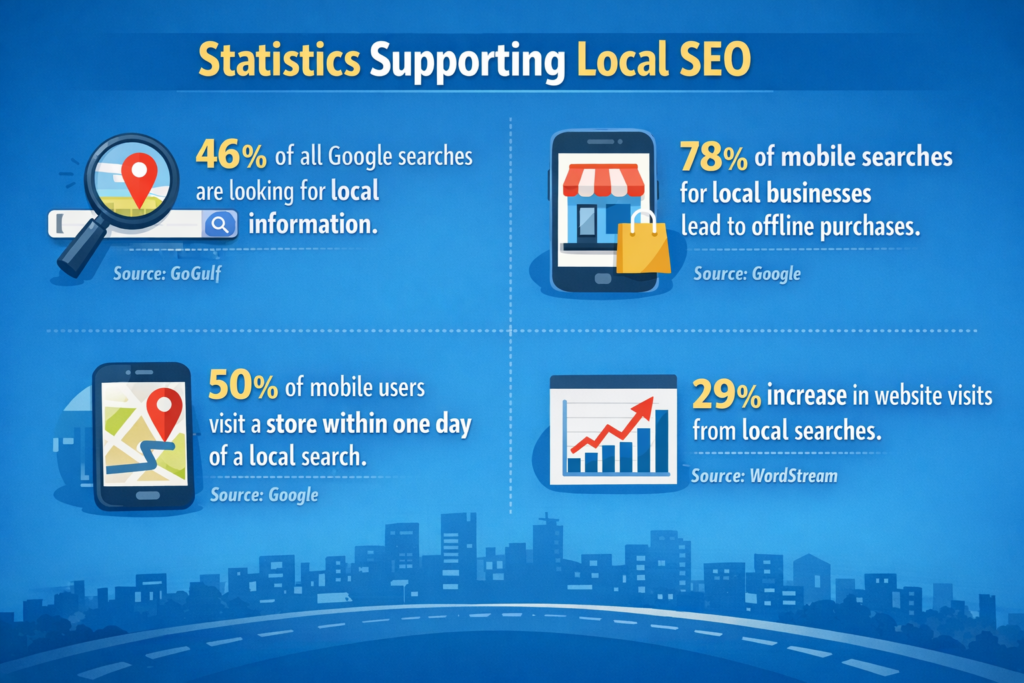
The majority of local searches now happen on mobile devices. According to Google, 76% of people who search for something nearby visit a business within 24 hours. Optimizing your site for mobile is no longer optional:
- Responsive design: Ensure your website automatically adjusts to fit different screen sizes.
- Fast loading times: Use tools like Google PageSpeed Insights to check your website’s load speed and optimize it.
- Clear CTAs: Make sure that your phone number, directions, and call-to-action buttons are easy to access.
6. Create Localized Content
Content marketing is a great way to connect with your local audience. Creating content that resonates with your area can help your business stand out in local searches.
- Write blog posts about local events or news: Share your expertise on topics that interest your community.
- Create location-specific landing pages: For multi-location businesses, create dedicated landing pages for each location that includes location-specific content and keywords.
7. Leverage User-Generated Content (UGC)
User-generated content is a powerful tool in building trust and improving your local SEO. For example:
- Customer reviews: Ask satisfied customers to leave reviews on Google, Yelp, or Facebook.
- Social media mentions: Encourage local customers to post pictures or mention your business on social platforms. Feature these on your website or social profiles.
- Local Q&A forums: Participate in local forums like Reddit’s local subreddits to answer questions and share helpful advice.
8. Monitor and Track Local SEO Performance
Using tools like Google Analytics, Google Search Console, and local SEO tools such as BrightLocal, you can track your performance and adjust your strategy:
- Keyword rankings: Keep an eye on your rankings for location-specific keywords.
- Traffic sources: Monitor where your traffic is coming from, especially from Google Search and Maps.
- Conversion rates: Track how well your site is converting visitors into customers and adjust your CTAs if needed.
Reddit Insight on Local SEO:
In this Reddit thread, SEO experts share their best practices, tips, and real-world examples that can help you refine your local SEO efforts and stay ahead of the competition.
9. Track Competitors’ Local SEO Efforts
It’s essential to monitor what your competitors are doing in local SEO. Look at their website structure, Google My Business profiles, reviews, and backlinks. Tools like Ahrefs, SEMrush, and Moz can help you analyze competitor performance and identify gaps in your strategy.
Conclusion
A successful local SEO strategy is an ongoing process. By implementing the above tactics and staying committed to providing excellent service to your local customers, you’ll not only improve your search visibility but also build long-term relationships within your community. Stay consistent, track your progress, and keep optimizing to stay ahead of your local competitors.
For businesses targeting local markets, mastering local SEO can significantly impact growth. By following these strategies, you’ll be well on your way to improving your visibility and attracting more customers to your business.